Tengah Garden Residences Signals New Growth in Singapore’s Property Market
Singapore’s property market continues to expand beyond the city core, with suburban launches playing a growing role in overall price stability and buyer demand. Recent data from the Urban Redevelopment Authority shows steady interest in well-planned towns outside the traditional central districts, reflecting shifting lifestyle needs and long-term investment confidence.
Against this backdrop, Tengah Garden Residences Singapore has emerged as a closely watched development in current property headlines. Located near Hong Kah MRT and set within Singapore’s first Forest Town, the project reflects how urban planning, transport access, and sustainability now shape buyer decisions. Analysts see this launch as a practical test of whether eco-focused townships can sustain strong demand while supporting national housing goals.
Tengah’s location in District 24 places it within a part of Singapore that has seen gradual transformation over the past decade. Once viewed as a quieter residential zone, the area is now benefiting from infrastructure investment and improved connectivity. The upcoming Jurong Innovation District and the wider Jurong Lake District have strengthened the western region’s appeal, drawing attention from homebuyers seeking value without giving up convenience.
Connectivity as a Price Driver
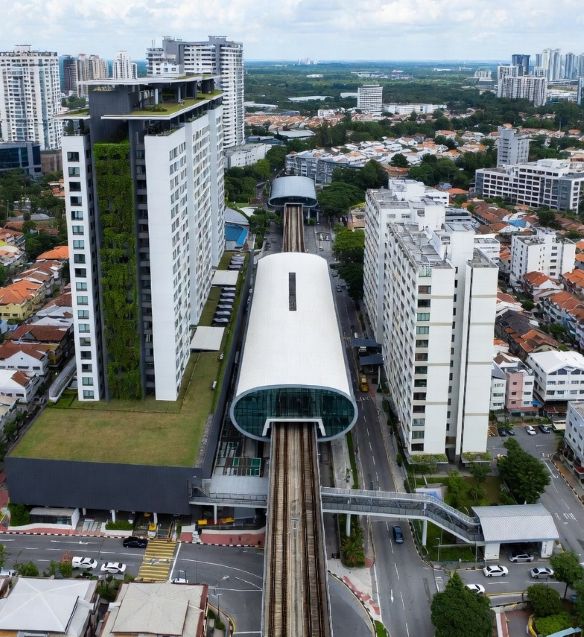
Transport access remains one of the most reliable indicators of property demand in Singapore. Developments close to MRT stations often see stronger interest during launches and better resale performance over time. Proximity to Hong Kah MRT enhances daily commuting options while linking residents to major employment nodes. This level of access supports price resilience, even during periods of broader market caution.
Real estate professionals note that buyers increasingly prioritize predictable travel times over proximity to the city center. As hybrid work becomes more common, suburban homes with strong rail links offer flexibility. This trend has encouraged developers to focus on sites where transport upgrades are already planned or underway.
Forest Town Planning and Lifestyle Appeal
Tengah’s identity as a Forest Town sets it apart from earlier housing estates. The planning concept emphasizes green corridors, car-lite zones, and shared community spaces. These design choices align with government sustainability targets while responding to resident demand for healthier living environments. Green features are no longer seen as optional extras, they are becoming baseline expectations for newer developments.
Projects like Tengah Garden Residences Singapore illustrate how environmental planning can translate into lifestyle value. Access to parks, cycling paths, and nearby amenities supports daily living while strengthening long-term desirability. For families and younger buyers, these features often influence purchasing decisions as much as unit size or layout.
Investor Interest and Market Signals
Investor attention toward Tengah also reflects broader economic considerations. Singapore property has long been viewed as a hedge against inflation, supported by limited land supply and consistent population demand. For those curious about the funding side of property investment, understanding the capital needed for real estate investment can be an important first step before entering the market. Suburban developments with clear planning frameworks offer investors exposure to growth without the premium pricing seen in prime districts.
Foreign buyers, where eligible, and local investors alike monitor how new launches perform in early sales phases. Strong take-up rates can signal confidence in future price appreciation, while slower absorption may point to affordability limits. Early indicators from Tengah are therefore watched as a reference for similar upcoming projects.
What This Launch Suggests About the Market
The attention surrounding Tengah Garden Residences Singapore highlights how Singapore’s property story is evolving. Growth is no longer defined only by central locations, but by connectivity, planning quality, and liveability. Suburban projects that integrate transport, green design, and community features are increasingly setting the pace for the next phase of market development.
As Singapore balances housing needs with economic stability, launches like this provide insight into buyer priorities and investor sentiment. Tengah’s progress will offer clues about how future towns are shaped and how property continues to function as both a home and a financial asset.
About The Author

