Why Financial Transactions in Voorhees Still Depend on Verified Signatures in a Digital Economy
The Federal Reserve reports that electronic payments account for the vast majority of non-cash transactions in the United States, showing how rapidly financial activity has shifted online. Consumers can now manage banking, investment accounts, loan applications, and money transfers through digital platforms without visiting a physical office. Despite these technological advances, verified signatures continue to play a major role in financial transactions, especially in communities such as Voorhees, New Jersey.
Voorhees is home to professionals, retirees, homeowners, and families who regularly engage in property transactions, refinancing agreements, estate planning, and financial asset transfers. While many of these transactions now begin online, institutions still require formal identity verification before important documents can be finalized. Companies such as CND Notary help support this process by providing services like mobile notary Voorhees for clients who need secure and legally compliant document authentication. The continued reliance on verification reflects an important reality of modern finance: organizations must confirm that individuals signing documents fully understand the agreements and are legally authorized to execute them.
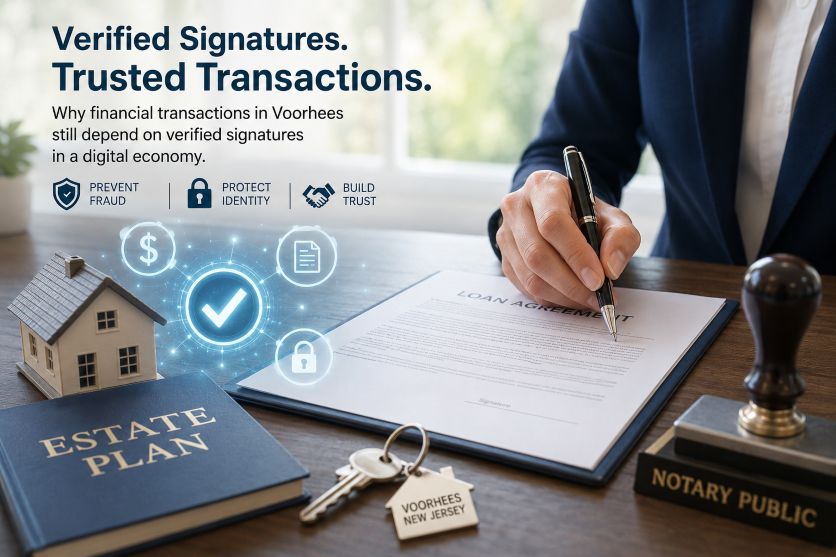
The Expansion of Digital Financial Services
Digital banking has transformed how people handle everyday financial responsibilities. Customers can deposit checks, monitor investments, pay bills, and transfer funds using mobile devices and online platforms. Lending institutions increasingly rely on electronic document systems that simplify application procedures and reduce processing times.
Research published by the Bank for International Settlements shows that financial technologies improve efficiency, lower administrative costs, and expand access to services. Businesses benefit from faster operations, while consumers gain convenience and flexibility when managing financial matters.
The transition toward digital finance accelerated significantly over the past decade as consumers became more comfortable handling sensitive information online. Financial institutions responded by investing in encrypted platforms, digital document management systems, and stronger cybersecurity measures designed to protect customer information.
However, some transactions still require additional safeguards beyond basic electronic signatures. Mortgage agreements, estate documents, legal disclosures, and property transfers often involve obligations that require stronger authentication methods to satisfy legal and regulatory standards.
Why Verified Signatures Continue to Matter
Verification procedures serve multiple purposes within the financial system. They help reduce fraud, protect consumers, and establish compliance with laws governing financial transactions. Whether someone is executing loan documents, transferring ownership rights, or authorizing legal directives, identity verification helps confirm that the transaction is legitimate.
The National Notary Association explains that notarization discourages fraud by requiring signers to verify their identity before important documents are completed. The process creates a formal record that can support the validity of an agreement if disputes or legal questions arise in the future.
These protections benefit everyone involved in the transaction. Financial institutions gain confidence that agreements were properly executed. Buyers and sellers receive assurance that documents reflect genuine intent. Government agencies and courts can rely on established verification procedures when reviewing official records.
The Consumer Financial Protection Bureau also highlights identity verification as an important part of fraud prevention within the modern financial industry. As cybercrime methods become more advanced, maintaining trust in financial systems remains essential.
Financial Activity in Voorhees and Southern New Jersey
Voorhees provides a strong example of why verified signatures remain necessary even as financial systems become increasingly digital. Located within Camden County, the township experiences steady activity involving residential real estate, retirement planning, healthcare directives, and estate management.
Real estate transactions remain one of the most common situations requiring authenticated signatures. Home purchases and refinancing agreements involve mortgage contracts, disclosures, title documents, and closing paperwork that establish legal ownership rights. Many of these records must satisfy strict execution requirements before they can be enforced or officially recorded.
Data from the New Jersey Department of Community Affairs continues to show active residential housing activity throughout Camden County and nearby South Jersey communities. Every transaction depends on documentation intended to protect lenders, buyers, sellers, and other stakeholders involved in the process.
Estate planning also contributes to the demand for verified signatures in the area. Families frequently work with attorneys and financial advisors to prepare wills, trusts, powers of attorney, and healthcare directives. These documents often require notarization or formal witnessing to ensure legal enforceability.
Asset transfers and inheritance planning create similar requirements. Families updating beneficiary information, transferring property interests, or distributing financial assets often rely on authenticated documentation to minimize uncertainty and reduce the risk of future disputes.
How Mobile Notary Services Support Financial Transactions
Modern financial transactions in Voorhees often begin digitally. A homeowner may refinance online, a borrower may complete loan paperwork through a digital portal, or a family may review estate planning documents electronically. Even so, many of these transactions still require formal identity verification before documents can be finalized.
Mobile notarization services help bridge the gap between digital convenience and legal compliance by providing in-person verification and document witnessing where needed. Instead of requiring individuals to travel to a fixed office, authorized professionals can meet clients at homes, offices, healthcare facilities, or other approved locations to complete the signing process.
This flexibility is particularly valuable during real estate closings, loan signings, and estate planning matters involving multiple parties or strict deadlines. By helping ensure that documents are properly executed, mobile verification services support efficient financial workflows while maintaining compliance with legal requirements.
The increasing use of remote technologies has not removed the need for trusted authentication. Instead, it has changed how and where verification takes place. Many financial transactions now begin digitally, continue through secure document-sharing platforms, and conclude with verified signatures that satisfy institutional and regulatory standards.
The Future of Authentication in Financial Services
The future of financial authentication will likely combine emerging technologies with long-established verification principles. Biometric identification systems, encrypted digital identities, blockchain-based records, and advanced authentication platforms are being explored as tools that may improve document security and simplify verification procedures.
Research from the World Economic Forum suggests that trusted digital identity systems could improve efficiency while increasing confidence in online transactions. These innovations may reduce delays in financial workflows and support the continued expansion of secure remote transactions.
As financial technology evolves, consumers and investors increasingly monitor developments in digital banking, cybersecurity, and authentication systems to better understand how innovation may affect lending, investing, and long-term financial planning.
Even as technology advances, the purpose of verification is unlikely to change. Financial institutions, government agencies, and consumers all rely on dependable methods for confirming identity, intent, and legal consent. Regulations may adapt over time, but trust will remain central to financial systems. Similar principles of responsibility and integrity are also reflected in discussions about faith and discipline in everyday decision-making, where accountability and ethical behavior continue to shape both personal and professional choices.
Digital finance has made transactions faster and more convenient than ever before. Yet communities such as Voorhees demonstrate why verified signatures continue to matter. Real estate agreements, lending transactions, estate planning documents, and wealth transfers all depend on reliable authentication procedures. Whether through traditional notarization, remote verification, or mobile document witnessing, verified signatures remain an essential safeguard that supports compliance, consumer protection, and long-term confidence in modern financial transactions.
About The Author

